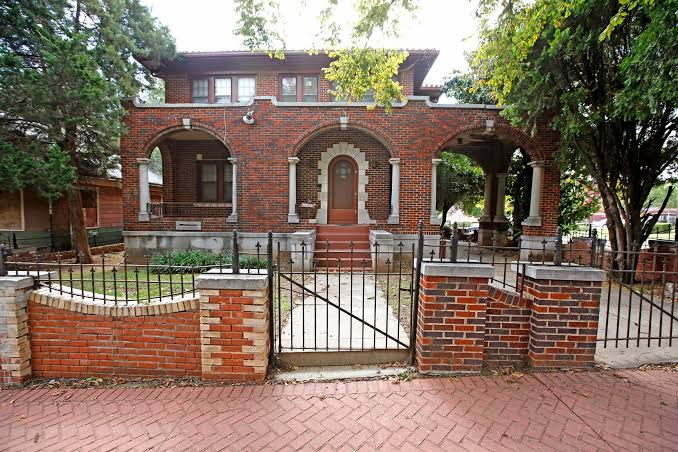
The Brockway Center and Lyons-Luster Mansion are two historically significant sites within Northeast Oklahoma City’s Black community—a community that experienced lasting harm from past urban renewal efforts.
The Oklahoma City Urban Renewal Authority and Oklahoma City Redevelopment Authority, in partnership with the African American Cultural Heritage Action Fund of the National Trust for Historic Preservation, initiated a feasibility study to explore pathways for restoring and reactivating these important sites. Given this history, the effort required more than a conventional technical planning process. It called for an engagement approach grounded in restorative justice and trauma-informed practice—one that acknowledged past harms, rebuilt trust, and gave community members meaningful influence over decisions about the sites’ future.
The Brockway Center and Lyons-Luster Mansion are two historically significant sites within Northeast Oklahoma City’s Black community—a community that experienced lasting harm from past urban renewal efforts.
The Oklahoma City Urban Renewal Authority and Oklahoma City Redevelopment Authority, in partnership with the African American Cultural Heritage Action Fund of the National Trust for Historic Preservation, initiated a feasibility study to explore pathways for restoring and reactivating these important sites. Given this history, the effort required more than a conventional technical planning process. It called for an engagement approach grounded in restorative justice and trauma-informed practice—one that acknowledged past harms, rebuilt trust, and gave community members meaningful influence over decisions about the sites’ future.
Our Strategy
In collaboration with AEA Consulting and Open Design Collective, Public Works Partners led an engagement process that placed meaningful decision-making authority with the Northeast Oklahoma City Legacy Builders, a group of residents, entrepreneurs, artists, and other community stakeholders.
Drawing on restorative justice and trauma-informed planning principles, Public Works designed community convenings that created space for healing, reflection, and collective decision-making. The process acknowledged the lasting impacts of past injustices while celebrating the community’s history, accomplishments, and aspirations for the future. Together, participants explored how the restoration of the Brockway Center and Lyons-Luster Mansion could create tangible community benefits and contribute to actionable reparations for Oklahoma City’s Black community. Through this process, the Legacy Builders identified a Community Investment Trust as their preferred model for collective ownership of the two sites.
Impact
and Outcome
The proposed Northeast Oklahoma Community Investment Trust would be the first of its kind, offering a potential national model for preservation economics centered on local wealth-building, collective ownership, and direct community control.
Rather than transferring the future of these historic assets to outside interests, the model creates a pathway for community members to participate directly in their stewardship and economic benefit. Beyond establishing a path forward for the Brockway Center and Lyons-Luster Mansion, the planning process helped lay the foundation for a new relationship between Oklahoma City’s urban renewal authorities and the Black communities harmed by past urban renewal practices. The project demonstrates how restorative, community-driven planning can transform a technical feasibility study into a vehicle for meaningful repair, community ownership, and long-term self-determination.