
By: Moe Magali
Joining the Urban Land Institute’s Health Leaders Network has been one of the most transformative experiences of my career. It reinforced something I’ve long believed: health, equity, and urban design are inseparable—and the way we plan, govern, and build our cities directly shapes people’s daily lives. Over the past year, the program became a bridge between global examples, cross-sector learning, and the community-focused work I lead at Public Works Partners.
Why Cohort 8 Mattered
What made Cohort 8 meaningful wasn’t the title, it was the structure. The Network is designed as a leadership lab where people from public health, planning, real estate, design, community development, and policy come together with a shared commitment to creating healthier, more equitable built environments. Its emphasis on learning, networking, and making a real difference kept the work grounded in practice, not theory.
Learning From Cities: Miami and Hong Kong as Classrooms
Miami and Hong Kong became two of the most influential classrooms of the program.
In Miami, the city’s climate vulnerability, layered histories, and cultural richness were impossible to ignore. Moving through different neighborhoods, we saw firsthand how decisions about infrastructure, shade, parks, and transportation intersect with race, economics, and resilience. A reclaimed transportation corridor—now an active public space filled with movement and community energy—captured how design, advocacy, and policy can converge to create healthier, more connected neighborhoods.
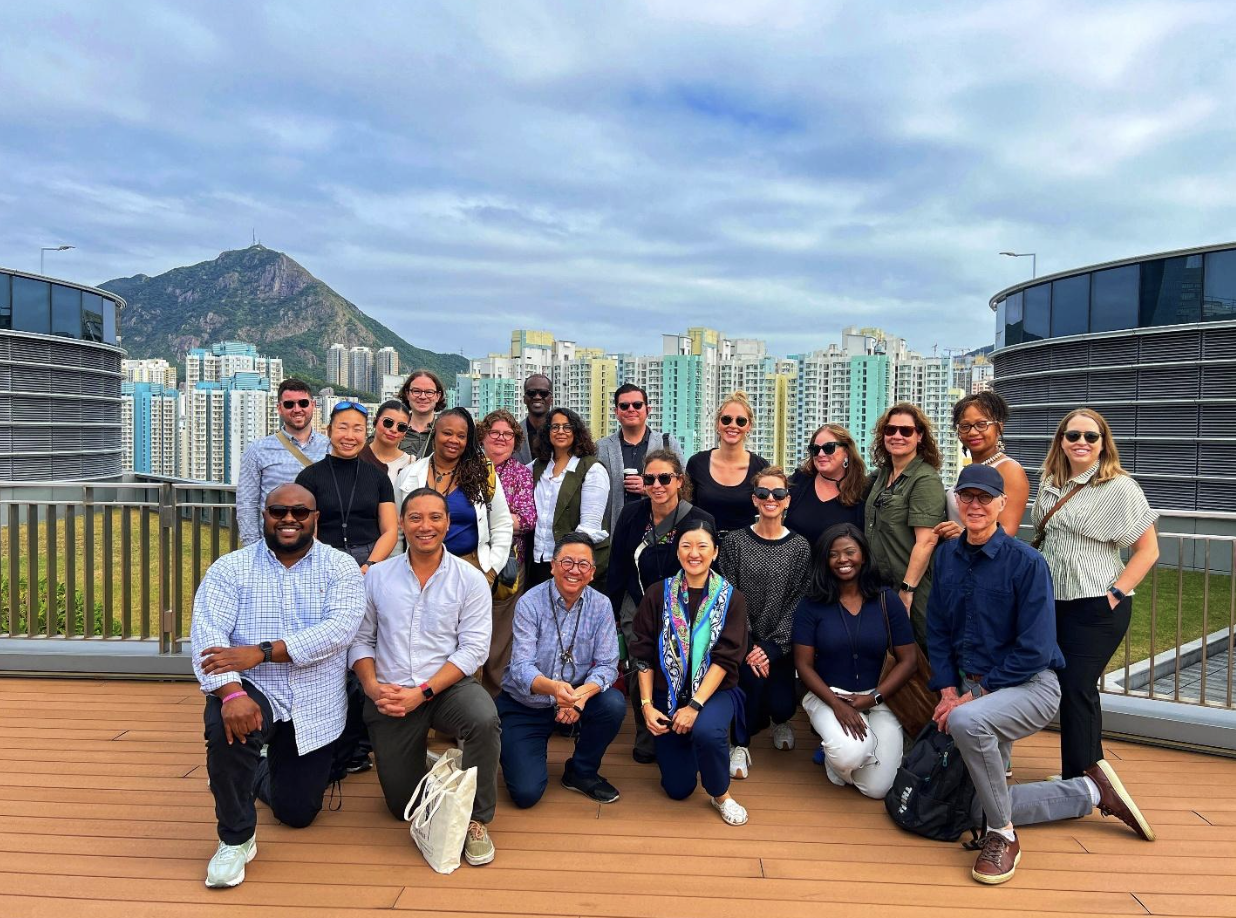
Hong Kong offered a contrasting but equally powerful lesson. Its density felt intentional, almost choreographed. Transit functioned like a circulatory system; public housing was fully integrated into the city’s core; waterfronts balanced recreation with climate protection. Health wasn’t branded or announced—it simply showed up in how people lived. The city made clear that health is a system outcome, shaped by decades of coordinated decisions across land use, governance, transit, and housing.
Despite their differences, both cities illustrate the same truth: when planning, infrastructure, and community priorities align, the built environment becomes a partner in advancing health and equity.
Learning From My Peers: Small-Group Deep Dives
Some of the most meaningful learning occurred in our monthly small-group sessions. These conversations, rooted in honesty and curiosity, invited us to explore how healthy our own communities are, compare local policy landscapes, and pressure-test ideas across geographies. They also revealed how consistent the drivers of inequity are, whether in urban or rural areas: disinvestment, exclusionary policy, and lack of community power show up everywhere, just in different forms.
The projects my peers shared added depth to this understanding. Together, they explored how zoning and street design influence safety and mobility; how national housing shortages are shaped by policy and financing systems; how heirs’ property destabilizes families and affects long-term health; how transit-oriented development can be leveraged for cultural restoration; and how mixed-use districts can drive reinvestment while still grappling with affordability and displacement.
Collectively, these projects formed a mosaic of what shapes community health—not just design choices, but land-ownership structures, generational inequities, political dynamics, and market forces.
How the Curriculum Pushed Us to Reflect and Act
What I appreciated most about the program is that it insisted on grounding ideas in reality. Monthly meetings, expert webinars, and hands-on assignments—like interviewing someone outside the field about their neighborhood, conducting walking audits, or analyzing a policy in real time—kept us focused on lived experience. Small-group presentations added another layer, offering space to test ideas, get feedback, and learn from how others navigate similar challenges.
This rhythm of learning, doing, and reflecting not only deepened my understanding of health and equity—it shifted how I want to lead.
What I’m Bringing Back to Public Works Partners
This experience gave me clarity about how I want to shape my practice. Moving forward, I’m committed to:
- Embedding health equity at the start of every project—not as an afterthought, but as a guiding principle.
- Treating cross-sector collaboration as essential, especially across housing, transportation, workforce, environment, and community wellbeing.
- Viewing underutilized spaces—corridors, leftover parcels, dormant public land—as opportunities for health and connection when paired with community leadership and creative financing.
- Using data, lived experience, and storytelling together, recognizing that no single lens is sufficient on its own.
In short, health and equity are now foundational to how I design project approaches.
Why I’m Grateful—and Energized for What’s Next
I’m deeply grateful for a curriculum that moved fluidly between big ideas and real practice, and for peers who brought honesty, creativity, and vulnerability into every session. I’m also grateful to my colleagues at Public Works Partners for supporting this opportunity and encouraging me to bring these lessons into our work.
What began as professional growth has become a North Star for how I want to show up in my field: committed to building cities and systems where health and equity are non-negotiable. As I carry the lessons from Miami, Hong Kong, and countless peer conversations into the next chapter of my work, I’m energized by the potential to help shape communities that are healthier, more just, and more connected.
Here’s to continuing that work—one project, one partnership, and one community at a time.