
Reflections on housing, mobility, public space, and the responsibility to turn urban planning into meaningful change.
Cities tell stories, and not only through their architecture and streets. They tell them through the choices they make about who belongs, who benefits, and whose future matters.
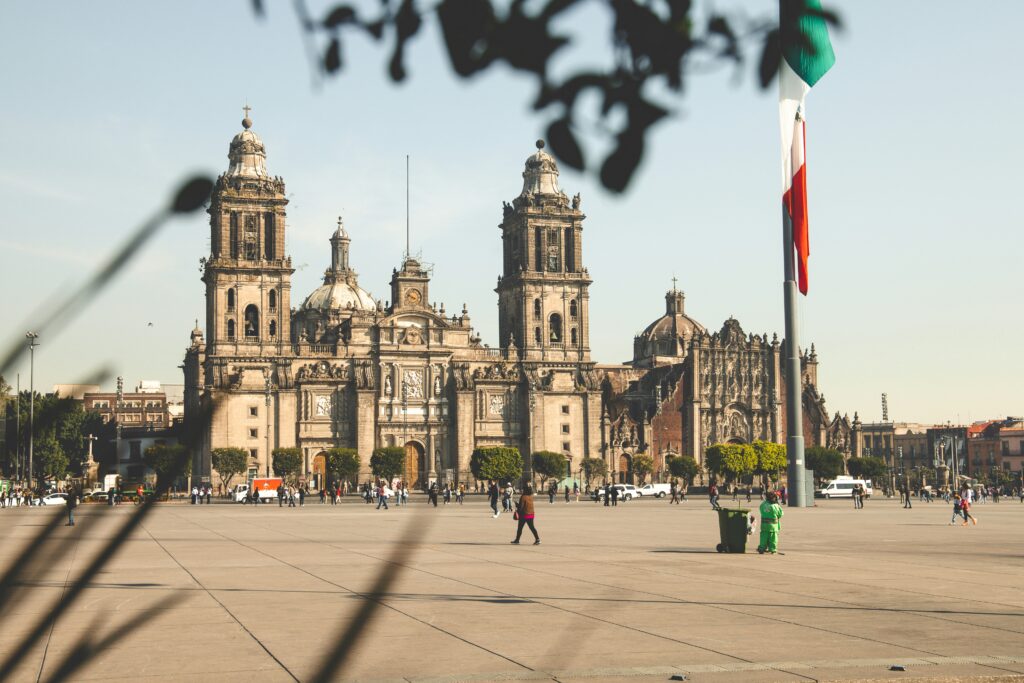
My recent study trip to Mexico City with the Urban Design Forum reminded me that cities are living expressions of our collective values, histories, and contradictions. I am grateful to the Forum, our hosts, and my fellow delegates for the conversations, which were as valuable as the places we explored. Mexico City did not leave me with a single model to bring home. It left me with a renewed sense of responsibility.
After more than two decades as an urban planner, I have come to believe that our most important questions are rarely about what we can build. They are about what we are trying to accomplish, for whom, and whether our investments meaningfully improve people’s lives. Mexico City sharpened that conviction and pressed me on four ideas I intend to carry into practice.
Infrastructure is social infrastructure
People do not experience housing, mobility, public space, and the environment as separate categories, even though our funding streams and agencies do. Housing affordability shapes access to jobs. Transportation determines whether opportunity is within reach. Parks influence health, connection, and belonging.
A transit investment is not only about moving people. It can decide whether a parent reaches a job or an older adult reaches healthcare. Mexico City’s UTOPÍAS, which pair public amenities with community-serving activities, offer a useful framework for how physical investment can support social outcomes. The lesson is not that every city should replicate a program. Rather, it is that we should judge infrastructure by the lives it enables, not only the facilities it delivers.
That requires redefining success. Construction milestones, ridership, and unit counts matter, but they tell only part of the story. What if we also asked whether an investment strengthened social connections, reduced everyday burdens, or deepened residents’ sense of belonging, and were prepared to make different decisions based on the answers?
Participation is not power
Engagement is now a standard feature of planning: public meetings, surveys, workshops. But participation does not guarantee influence. Too often, communities are invited in after the consequential decisions have been made, with funding allocated, boundaries drawn, and alternatives narrowed. Residents are heard without the power to change the outcome.
Community-led models, including the Indigenous-led Chapultepec 342 housing cooperative featured in our study-trip materials, ask who has the authority to shape a place and how that authority is shared. For planners, this means being transparent about what is genuinely open, who makes the final decisions, and how community priorities influence investment. It means recognizing that communities bring expertise, not merely opinions. Without community-led strategy, engagement becomes an exercise in validating decisions rather than shaping them.
A plan is a commitment, not an outcome
Planners are good at vision. The real test comes after adoption. Is the project funded? Do agencies coordinate? Are community priorities preserved through design, procurement, and construction? Are investments maintained over time?
These questions matter, especially in American cities where housing, transportation, parks, health, and economic development sit within separate agencies. Residents experience interconnected problems, while institutions are organized to address them one at a time. A neighborhood facing rising rents, limited transit, and underinvested public space will not change course by fixing only one. The task is to move from coordinating projects to coordinating results.
Consultants share this responsibility. We should not hand over a plan and consider the work finished. We should help clients set priorities, identify funding pathways, build institutional capacity, define measurable outcomes, and create mechanisms for accountability. Our work should be judged by the changes our recommendations make possible.
Resilience is social as well as environmental
Mexico City’s relationship with water and earthquakes makes resilience unavoidable. Ecological approaches such as Parque Hídrico La Quebradora show the value of considering water, public space, and environmental systems together. But resilience is not only an engineering problem. A neighborhood can have upgraded drainage and still be vulnerable if residents face housing insecurity or weak connections to decision-makers. Strong community organizations can be decisive in a crisis.
Having worked in New Orleans and now in both the New York and Los Angeles regions, I have seen how environmental vulnerability intertwines with community stability and recovery. A resilient city is one where communities have the resources, relationships, and agency to shape recovery and adaptation. That means investing in social infrastructure alongside physical infrastructure, and asking whose resilience we are building: whether our strategies protect existing communities or make it harder for them to remain.
Learning with humility
Study trips carry a risk: treating another city’s innovations as products to import. What succeeds in Mexico City may depend on political commitments, funding arrangements, or institutional capacity that differ in Pasadena, New York, or New Orleans. The value lies in understanding the conditions that made a project possible. What problem was it designed to solve? Who championed it? How was it funded? What barriers did it overcome, and what trade-offs were made? No city has resolved every tension between growth, equity, affordability, and sustainability. Our job is to bring lessons home by adapting principles, not reproducing formulas.
From inspiration to accountability
I returned energized, and aware that inspiration alone is insufficient. For me, that means asking harder questions at the start of projects about what success looks like, who defines it, and how we will know we have achieved it. It means treating engagement as a pathway to shared decision-making, and designing implementation strategies that acknowledge institutional realities while staying accountable to community aspirations.
Our cities deserve more than compelling visions. They deserve planning processes that distribute influence, investments that expand opportunity, and institutions willing to be accountable for results. The question is not simply what kind of cities we want to build. It is what kind of future we are willing to organize ourselves to deliver.