
By: Selina Heinen
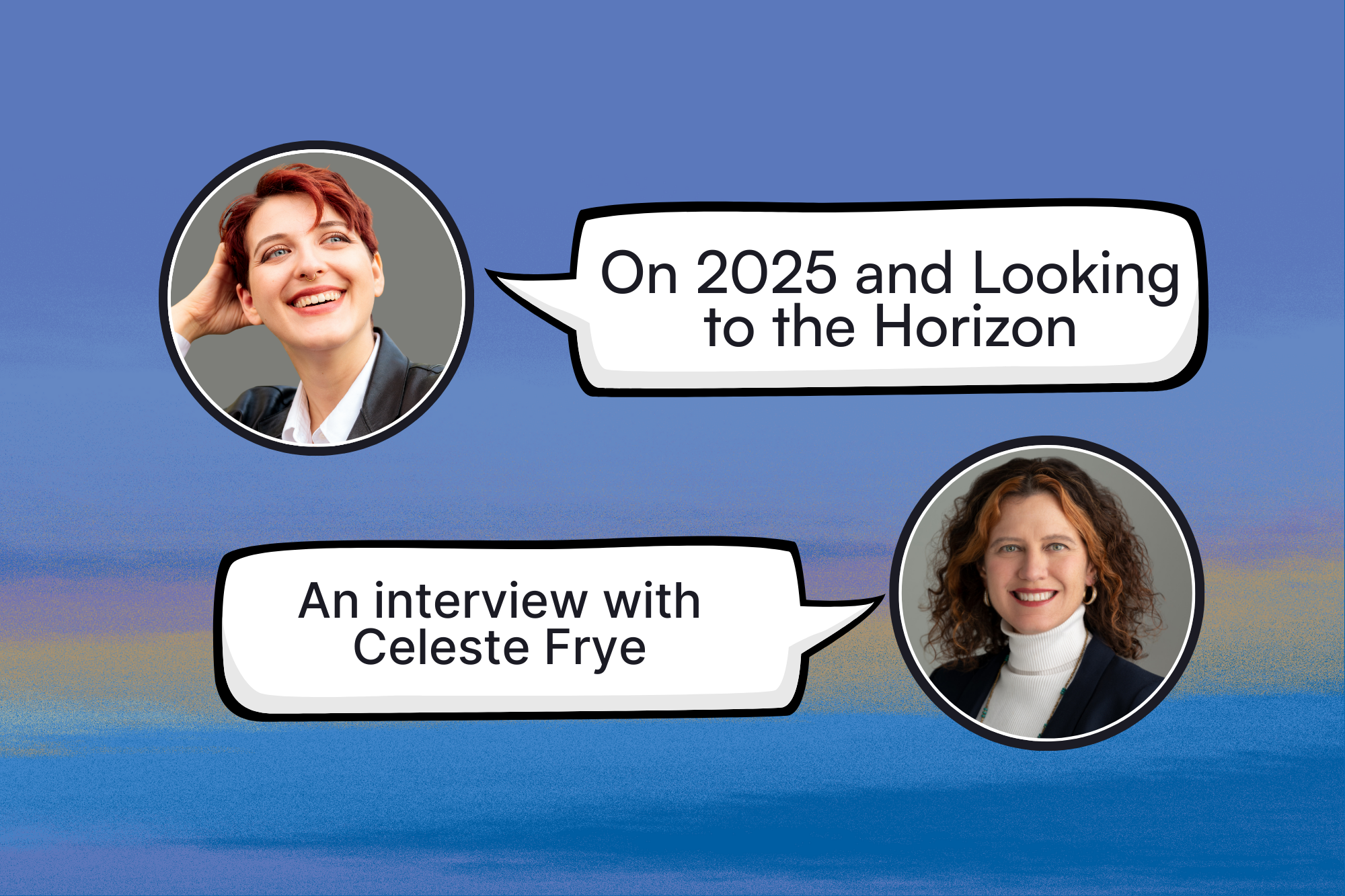
December is the time of year when America slows down,l reflects on the past year, and manifests for the next. As Public Works plans for the year ahead, I sat down with Celeste Frye, CEO and Principal of Public Works, to talk about the firm’s past, present, and future.
If you are reading this, you have likely already experienced Celeste’s affable nature. She is a talented conversationalist with an extensive knowledge of New York City. Celeste speaks with a confidence and clarity that welcomes you to dive in deep. If you ever have the chance at a conference or event, this writer recommends you steal her away for five minutes to talk about anything under the sun.
Please enjoy this interview, in which Celeste and I discuss how she navigates administration transitions, this year’s nonprofit funding challenges, and what mission-driven organizations can prepare to face in 2026.
Before we explore what is on the horizon for Public Works Partners, let’s first touch on the past year, 2025. Is there a client project from this year that best represents the firm and where you want it to go?
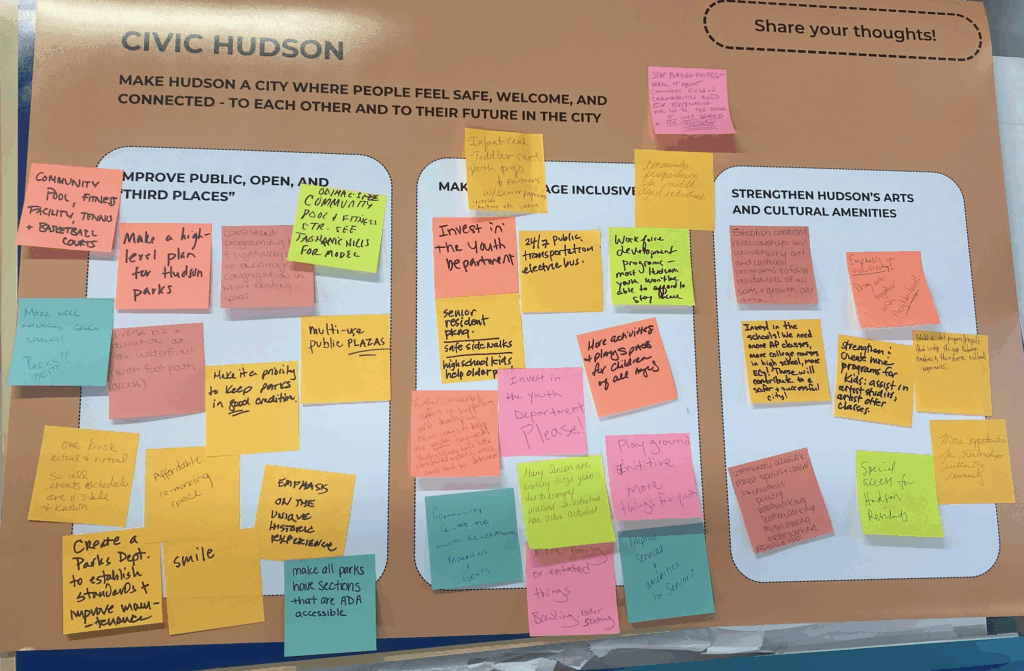
With our two practice areas, Organizational and Community Health, two projects that feel very special in 2025, and reflect where I want to see our firm go. The first one, from our Community Health practice, is the City of Hudson‘s comprehensive plan. This was Public Works Partners’ first time serving as the lead planning firm for a comprehensive plan, so it has been a huge step for us.
Hudson is a small and very diverse city on the Hudson River in New York State. They wanted to focus on preserving the mix of people and the vibrant economy that they have, while continuing to welcome new residents. They turned to us to emphasize community engagement, affordability, and sustainability as part of their comprehensive plan. We’re really proud of that work, and we’ve developed a plan for Hudson that will help them preserve what they love about their city while managing the exciting growth they’re experiencing.
On the Organizational Health side, we are working with the Department of Housing Preservation and Development to support ‘Liberty Link,’ an innovative pilot program that will deliver low-cost internet to thousands of Bronx and Manhattan residents in affordable housing and Section 8 households. The pilot internet network will connect 2,200 households to fiber internet and deploy building-wide Wi-Fi infrastructure. We’re excited to be working on this initiative that melds our interests in housing and digital equity.
Those are two really incredible projects. Speaking of working with public agencies, NYC is getting a new mayor in 2026–Zohran Mamdani. Having worked so closely with the City, state, and federal governments for years, how do you manage shifts in administrations?
That’s an excellent question. We have been through several mayoral transitions. I started my consulting practice during the Bloomberg administration. Then we transitioned to De Blasio, to Adams, and now to the Mamdani administration, in addition to state and federal level transitions.
When undergoing a high-impact transition, we live by the same tenets that we advise our clients–look ahead, plan for the worst but also expect the best, and be prepared for change. Think about how what you do will fit best with what a new administration will emphasise and prioritise.
We have core strengths in economic development and workforce development, and increasingly in community-level engagement around major housing and infrastructure projects. Those are all issues that will be very important in the Mamdani administration, and we’ll be able to build on our track record and long-term relationships. Even during major transitions, many key stakeholders and those responsible for advancing the work may move around, but they stay in the field and within the network. Maintaining and enhancing those relationships and building on them is important.
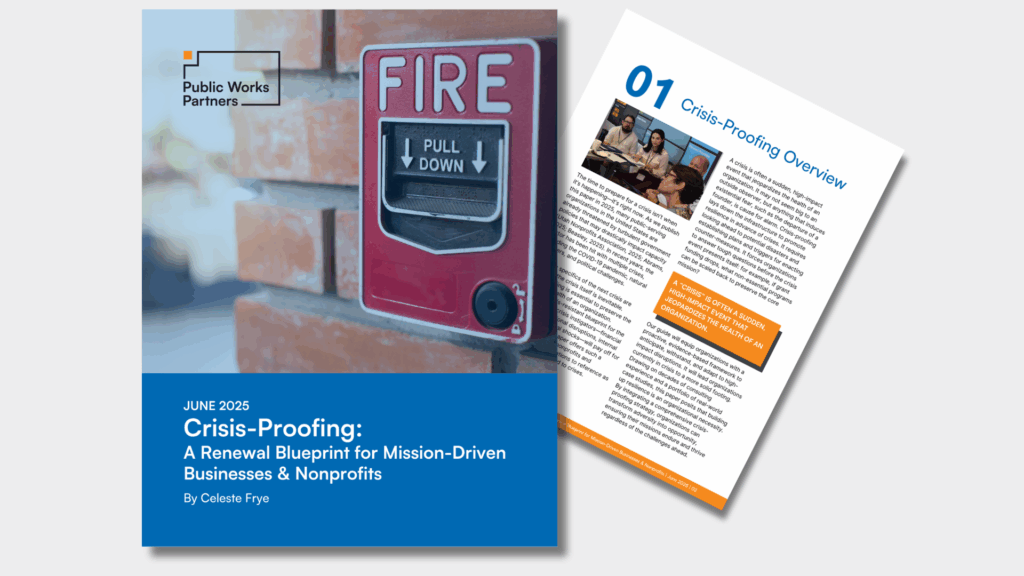
You said a major part of bracing for a transfer of power is making a plan and preparing for the worst. That ties into the white paper that you released this year, Crisis-Proofing: A Renewal Blueprint for Mission-Driven Business & Nonprofits. This paper resonated with many readers. Do you have any further advice on the subject?
Sure. Whether you are preparing for or managing a current crisis, it’s incredibly important to maintain your core values. To review your organization’s mission and ensure that everything you do is aligned with it. If you have to make hard choices, preserving that core of who you are and who you serve as an organization is the priority.
So that’s incredibly important, and then also thinking ahead to how you may need to protect key assets of the organization. Make sure you’re never too dependent on any one administration or government funding in general. We saw a lot of funding dry up in 2025. To reduce reliance on unstable funding sources, I recommend seeking new clients in our case, or new funding streams in the case of a nonprofit organization.
After seeing the struggles of organizations that rely on government funding in 2025, what are three problems you predict organizations will face in 2026?
In 2026, I fear but expect that the federal funding situation will get worse before it gets better. We’re not going to see a restoration of federal funding until at least after the midterms, at the end of 2026. We will likely see some further contraction and cuts of what the federal government is doing, and those are going to prove challenging. Particularly in the housing and homeless services world, we’re going to see some very real difficulties coming up.
Building up individual and more local-level government support will be important. I believe we’ll see more community-level support as people work to ensure their local areas have as much of what they need as possible. As a community, we’ll need to think creatively about how we can continue to serve those most in need.
To give you the opportunity to plug some of your work here, how can Public Works help organizations in the challenging time ahead?
For any of our clients, we are always willing to look creatively at what an organization could leverage, such as selling real estate or developing funding strategies for different programs. We also look at where an organization may be best positioned to provide a particular service, and therefore where it may need to pivot and partner to get things done.
Those are all areas where we regularly advise our clients and work with them to research and engage with their communities to understand what they really want and need in this time, which is also incredibly important.
Is there something in our work that surprised you in 2025? Were there any major discoveries that you plan to take with you to help solve these future problems?
One of the things we’ve seen as an organization, but also in our work with communities, is that during times of transition, there is often a lot of movement. Within our organization, we saw more staff turnover than in several years.
As people emerged from the pandemic and had a few years of work experience, they were finally ready to pursue new goals and opportunities. That is actually very good for an organization, but it can feel tumultuous when you’re going through it. You have to rethink how you do your work, how you interact directly with clients, and make reassignments. For us, it has re-energised and enabled us to look for folks with new skill sets that we’re very excited to add to the team. So that’s been exciting. Any organization can take these moments of transition and change to figure out how to use them for renewal, not going backwards.
Another thing that surprised me was that, by expanding our Southern California Office, we realised we need to be more intentional and invest more resources in building our presence there so we can add actual value to what our clients are doing and open up additional opportunities. So I’m excited in 2026 to put more of my own and the firm’s energy and resources into our practice out in Southern California. There’s a lot of interesting work happening there that we want to be a part of.
To wrap this up, what fun things do you see on the horizon for yourself, or for the firm in general?
2026 will be our 15th year as a firm and will mark my 10th year as the CEO of Public Works. I’m really excited to celebrate those key milestones as a company.
Congratulations on 15 years as a firm and 10 years as CEO! That’s a huge accomplishment, especially having navigated the pandemic, the post-pandemic, and all of those administrations you have seen. It’s very impressive to lead a firm for that long. I’m looking forward to seeing what public works does in the new year.
Thank you. And we’re very much looking forward to seeing what Selina does in the new year, as you finish your degree and go on to do really cool stuff. We’re excited to see how it goes.